Introduction
For many businesses, spreadsheets are the starting point for managing employee information, attendance records, leave requests, payroll calculations, and HR documentation. They are easy to use, affordable, and familiar to almost everyone.
However, as a business grows, spreadsheets often become difficult to manage. Employee records are spread across multiple files, payroll calculations take longer, attendance tracking becomes inaccurate, and important information gets lost in endless rows and columns.
If your HR team spends more time updating spreadsheets than managing people, it may be time to move to a Human Resource Management System (HRMS).
In this article, we’ll explore ten clear signs that your business has outgrown spreadsheets and why investing in HRMS software can improve efficiency, accuracy, and employee experience.
1. Employee Information Is Stored in Multiple Files
One of the most common problems growing businesses face is scattered employee data.
You may have:
- One spreadsheet for employee records
- Another for attendance
- Another for leave management
- Another for payroll calculations
When information is spread across multiple files, finding accurate data becomes difficult and time-consuming.
An HRMS centralizes all employee information into a single platform, making data easily accessible and reducing duplication.
2. Attendance Tracking Has Become a Daily Headache
Tracking attendance manually may work for a small team, but it quickly becomes challenging as your workforce grows.
Common issues include:
- Incorrect attendance entries
- Missed punch records
- Late arrival disputes
- Overtime calculation errors
An HRMS automates attendance management and provides real-time tracking, reducing administrative effort and improving accuracy.
3. Payroll Processing Takes Too Much Time
Payroll is one of the most critical HR functions.
When payroll calculations rely on spreadsheets, HR teams often spend hours verifying:
- Working days
- Overtime
- Leave deductions
- Tax calculations
- Salary revisions
Even small mistakes can impact employee trust.
A modern HRMS automates payroll processing, helping organizations generate accurate salaries and payslips while reducing manual effort.
4. Leave Requests Are Managed Through Emails and Messages
If employees apply for leave through:
- Emails
- WhatsApp messages
- Phone calls
- Paper forms
your HR team is probably spending unnecessary time managing approvals.
An HRMS allows employees to apply for leave online while managers can approve or reject requests instantly through a centralized workflow.
5. You Frequently Encounter Data Errors
Human error is unavoidable when information is entered manually.
Common spreadsheet-related mistakes include:
- Duplicate records
- Missing employee information
- Formula errors
- Incorrect calculations
As your organization grows, these errors can create significant operational challenges.
HRMS software minimizes manual data entry and improves overall data accuracy.
6. Generating Reports Takes Hours
Business leaders require HR reports for informed decision-making.
Typical reports include:
- Employee headcount
- Attendance reports
- Leave summaries
- Payroll reports
- Department performance data
When using spreadsheets, generating these reports often requires manual compilation and verification.
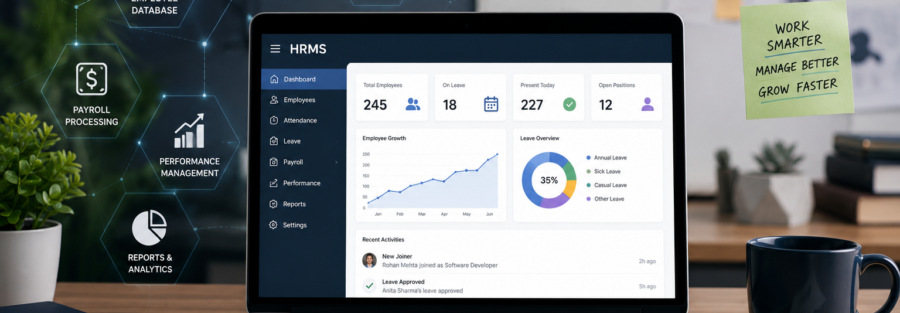
An HRMS generates reports instantly through automated dashboards and analytics.
7. Employee Self-Service Is Missing
Modern employees expect easy access to their information.
They want to:
- View payslips
- Check attendance
- Apply for leave
- Update personal information
Without an HRMS, HR teams spend considerable time answering routine employee requests.
Employee Self-Service (ESS) portals empower employees while reducing HR workload.
8. Compliance Management Is Becoming Difficult
As organizations grow, compliance requirements become more complex.
Businesses must manage:
- Employee records
- Tax documentation
- Payroll compliance
- Labor regulations
- Audit requirements
Manual processes increase compliance risks and make audits more challenging.
An HRMS helps maintain organized records and supports compliance management.
9. Remote and Hybrid Workforce Management Is Challenging
The rise of remote and hybrid work has changed how businesses manage employees.
Spreadsheets provide limited visibility into:
- Remote attendance
- Employee productivity
- Leave management
- Team availability
HRMS software enables organizations to manage employees effectively regardless of location.
10. Your HR Team Is Spending More Time on Administration Than Strategy
HR professionals should focus on:
- Employee engagement
- Talent development
- Recruitment
- Retention strategies
Instead, many teams spend most of their time:
- Updating spreadsheets
- Correcting errors
- Searching for records
- Preparing reports
An HRMS automates routine administrative tasks, allowing HR teams to focus on strategic initiatives that drive business growth.
Benefits of Implementing an HRMS
A Human Resource Management System offers numerous advantages:
Improved Efficiency
Automates repetitive HR processes and reduces manual work.
Better Accuracy
Minimizes human errors in attendance, payroll, and employee records.
Enhanced Employee Experience
Provides self-service capabilities and faster HR processes.
Real-Time Reporting
Offers valuable insights through dashboards and analytics.
Business Scalability
Supports organizational growth without increasing administrative complexity.
How to Know When It’s Time to Upgrade
If your business experiences three or more of the signs mentioned above, it’s a strong indication that spreadsheets are limiting your HR operations.
The sooner you implement an HRMS, the easier it becomes to:
- Manage employee information
- Improve productivity
- Reduce errors
- Support business growth
Conclusion
Spreadsheets may be sufficient when a business is small, but they become increasingly difficult to manage as organizations grow. Manual processes consume valuable time, increase errors, and limit visibility into workforce operations.
An HRMS provides a centralized, automated, and scalable approach to employee management, helping businesses improve efficiency while creating a better experience for both HR teams and employees.
Organizations that invest in HR technology today are better positioned to manage growth, improve productivity, and build stronger workplaces for the future.
Frequently Asked Questions
What is an HRMS?
An HRMS (Human Resource Management System) is software that helps organizations manage employee records, payroll, attendance, leave management, recruitment, and HR operations from a centralized platform.
Is HRMS suitable for small businesses?
Yes. Modern HRMS solutions are designed for startups, SMEs, and large enterprises, making HR management easier and more efficient regardless of company size.
Can HRMS automate payroll?
Yes. Most HRMS solutions automate payroll calculations, salary processing, deductions, and payslip generation.
How does HRMS improve employee experience?
HRMS provides self-service features that allow employees to access information, apply for leave, and view payslips without relying on HR staff.